
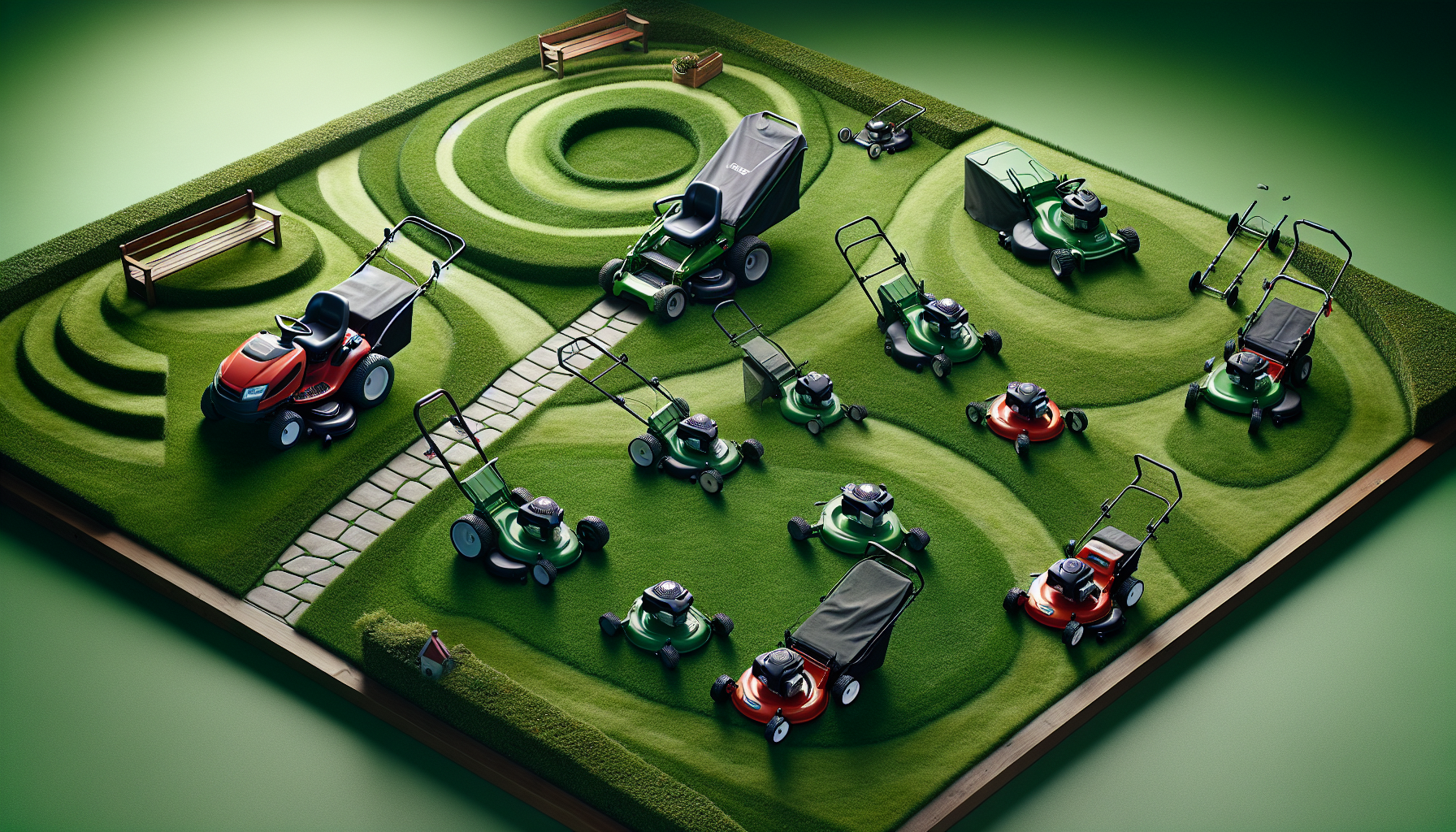
Choosing the right lawn mower is essential for maintaining a beautiful lawn, and understanding the various types available can help you make the best decision. In this guide, we will explore key features to consider when selecting a lawn mower that suits your yard’s specific needs, ensuring you maximize your enjoyment while mowing.
Table of Contents
- 🌱 Introduction to Lawn Mowers
- ⚠️ Caveats to Consider
- 🌳 Importance of Lawn Size
- ⏱️ Understanding the 75-Minute Standard
- 🛠️ Choosing the Right Walk Behind Mower
- 🔍 Deciding Between Big or Small Mowers
- 🛠️ The 30 Inch Mower – TimeMaster
- 🚜 Zero Turn vs Lawn Tractor
- 🌾 Techniques for Mowing Stripes in Your Lawn
- ❓ Frequently Asked Questions
🌱 Introduction to Lawn Mowers
Lawn mowers are essential tools for maintaining your yard’s health and appearance. These machines come in various types, each designed for specific lawn sizes and conditions. Understanding the different types of lawn mowers will help you choose the right one for your needs.
At their core, lawn mowers can be categorized into push mowers, self-propelled mowers, and riding mowers. Push mowers require manual effort to operate, while self-propelled mowers assist with movement, making them ideal for larger lawns. Riding mowers, including zero turns and lawn tractors, offer the most convenience for extensive areas.
Choosing the right lawn mower involves considering factors such as lawn size, terrain, and your personal preferences. This guide will help you navigate those choices, ensuring your lawn stays lush and well-groomed.
⚠️ Caveats to Consider
Before purchasing a lawn mower, it’s crucial to consider a few caveats. First, think about the terrain of your lawn. If your yard has steep hills or uneven ground, a self-propelled or riding mower might be more suitable. These options provide better stability and control.
Next, consider the maintenance requirements of each type. Walk-behind mowers typically require less upkeep than riding mowers, which may need more frequent servicing and repairs. Additionally, ensure you have adequate storage space for your mower, especially if you opt for a riding model.
Finally, budget is a significant factor. While investing in a quality lawn mower pays off in performance and longevity, it’s essential to find a balance between your needs and your budget. Remember that the most expensive mower isn’t always the best for your specific situation.
🌳 Importance of Lawn Size
The size of your lawn plays a pivotal role in determining the best lawn mower for you. Smaller lawns, typically under 8,000 square feet, can be efficiently managed with a 21 or 22-inch walk-behind mower. This size is easy to maneuver and provides sufficient power for regular mowing tasks.
For lawns between 8,000 and 15,000 square feet, a 30-inch walk-behind mower may be the best option. These mowers cover more ground in less time, making them ideal for larger properties while still allowing for easy handling.
If your lawn exceeds 15,000 square feet, consider investing in a riding mower. Zero-turn mowers, in particular, offer exceptional maneuverability and speed, allowing you to maintain larger areas efficiently. Understanding your lawn size will guide you in selecting the most suitable lawn mower.
⏱️ Understanding the 75-Minute Standard
When it comes to lawn care, time is a critical factor. The 75-minute standard serves as a benchmark for how long most people are willing to spend mowing their lawns each week. This includes not just mowing but also edging, trimming, and cleanup.
By adhering to this standard, you can ensure that lawn maintenance remains enjoyable rather than feeling like a chore. If your mowing routine consistently exceeds this timeframe, it may be time to reassess your equipment or lawn care strategy.
For those who find themselves spending more than 75 minutes, consider upgrading to a more efficient mower or optimizing your mowing schedule. Regular maintenance and timely mowing can significantly reduce the total time spent each week.
🛠️ Choosing the Right Walk Behind Mower
Selecting the right walk-behind mower involves evaluating several key features. Start by considering the size of your lawn and how much time you want to dedicate to mowing. For smaller lawns, a simple push mower may suffice, but larger areas will benefit from a self-propelled model.
Look for mowers with multiple functions, such as bagging, mulching, and side discharge capabilities. These options provide versatility, allowing you to adapt your mowing strategy based on lawn conditions. For instance, mulching is beneficial in most cases, while bagging may be necessary during fall leaf cleanup.
Engine power is another critical consideration. Aim for a mower with around 160 cc of engine displacement to ensure adequate power for various grass types and terrains. While upfront costs matter, remember that investing in a quality mower can lead to years of reliable performance.
🔍 Deciding Between Big or Small Mowers
When choosing a lawn mower, size matters. Big mowers are powerful and efficient, ideal for larger lawns, while smaller mowers are easier to maneuver, perfect for tight spaces.
Consider your lawn size. For areas under 8,000 square feet, a small mower is typically sufficient. However, if your lawn stretches beyond that, investing in a bigger mower can save time and effort.
Also, think about your mowing habits. If you enjoy mowing regularly, a larger mower can enhance your experience. Conversely, if you prefer a quick trim, a smaller model might be the right choice.
🛠️ The 30 Inch Mower – TimeMaster
The 30-inch mower, like the TimeMaster, is an excellent choice for lawns between 8,000 and 15,000 square feet. This mower combines the benefits of a walk-behind with the efficiency of a wider cut.
Thanks to its dual blades, the TimeMaster offers a clean cut, allowing for a healthier lawn. It’s self-propelled and designed for ease of use, making it manageable even for those who may not have the strength to push a heavier mower.
With a 30-inch mower, you can cover more ground without sacrificing the quality of your cut. It’s a perfect balance of size and power, making it a favorite among homeowners.
🚜 Zero Turn vs Lawn Tractor
When it comes to mowing larger lawns, the choice often boils down to zero-turn mowers and lawn tractors. Zero turns are known for their speed and maneuverability, allowing you to zip around obstacles effortlessly.
On the other hand, lawn tractors provide a more relaxed mowing experience. They are ideal for those who enjoy a leisurely approach to lawn care and often come with the added benefit of towing capabilities.
Both options have their merits. If you prioritize speed and efficiency, a zero-turn mower is the way to go. However, if you prefer a more comfortable ride and the ability to tow accessories, a lawn tractor might be your best bet.
🌾 Techniques for Mowing Stripes in Your Lawn
Mowing stripes can elevate your lawn’s appearance and showcase your mowing skills. To achieve this look, you need to press the grass down in alternating directions.
Start by mowing in one direction, ensuring you maintain a straight line. Then, on your next pass, mow in the opposite direction. This technique causes the grass blades to bend in different directions, reflecting sunlight and creating that striped effect.
For best results, use a mower with larger tires, as they help press the grass down more effectively. Consistency is key, so try to mow your lawn regularly to maintain those beautiful stripes.
❓ Frequently Asked Questions
- What size mower do I need for my lawn? The size of your mower should correspond to your lawn size. For lawns under 8,000 square feet, a smaller mower is sufficient. For larger lawns, consider a 30-inch mower or a riding mower.
- Are self-propelled mowers worth the investment? Yes, self-propelled mowers make mowing easier, especially on larger lawns. They reduce the physical effort required, allowing you to enjoy the mowing experience more.
- Can I mow stripes in my lawn? Absolutely! By mowing in alternating directions, you can create a striped effect. Just make sure to use a mower with larger tires for better results.
- How often should I mow my lawn? It’s best to mow once a week. However, during the growing season, you may need to mow every three to four days to keep your lawn looking its best.